Born, June 1979
Jun 1st - Santana Moss, American football player
Jun 5th - Pete Wentz, American musician (Fall Out Boy)
Jun 8th - Derek Trucks, American guitarist
Jun 8th - Pete Orr, Canadian baseball player
Jun 12th - Wil Horneff, Englewood NJ, actor (Ghost in the Machine, Sandlot)
Jun 12th - Dallas Clark, American football player
Jun 17th - Nick Rimando, American soccer player
Jun 19th - Quentin Jammer, American football player
Jun 20th - Charlotte Hatherley, English guitarist (Ash)
Jun 20th - Charles Howell III, Professional Golfer
Jun 20th - Cael Sanderson, Olympic Wrestler
Jun 20th - Lani Billard, Canadian actress
Jun 21st - Chris Pratt, American actor
Jun 22nd - Joey Cheek, American speed skater
Jun 22nd - Brad Hawpe, American baseball player
Jun 23rd - LaDainian Tomlinson, American football player
Jun 24th - Craig Shergold, British internet folklore subject
Jun 24th - Petra Němcová, Czechoslovakian-born model
Jun 24th - Mindy Kaling, American actress and TV producer
Jun 25th - Katie Doyle, American actress and reality television star
Jun 25th - Busy Philipps, American actress
Jun 25th - Richard Hughes, Scottish footballer
Jun 27th - John Warne, American musician (Relient K; Ace Troubleshooter)
Jun 27th - Kim Gyu-ri, South Korean actress
Jun 29th - Abs Breen, English singer
Jun 30th - Matisyahu, Hasidic Jewish Reggae singer
Jun 30th - Rick Gonzalez, Hispanic-American actor
Died, June 1979
Jun 2nd - Jim Hutton, actor (Ellery Queen), dies of liver cancer at 45
Jun 3rd - Arno Schmidt, writer, dies at 65
Jun 6th - Jack Haley, actor (Wizard of Oz), dies of cancer at 79
Jun 7th - Forrest Carter, American author (b. 1925)
Jun 9th - Cyclone Taylor, Canadian ice hockey player (b. 1884)
Jun 11th - John Wayne, actor (Green Berets, True Grit), dies at 72
Jun 13th - Darla Hood, actress (Our Gang 1935-45), dies at 47
Jun 15th - Ernst Meister, writer, dies at 67
Jun 16th - Nicholas Ray, American film director (b. 1911)
Jun 17th - Lou Frizzel, actor (Dusty Rhoades-Bonanza), dies at 58
Jun 29th - Lowell George, rocker (Mothers of Invention, Little Feat), dies at 34

6/28/2012


6/16/2012
The Way We Work

Those of us who toil in the cube farms of America are well versed in the use of spreadsheets and word processors, now pretty much exclusively Word and Excel. It's hard to imagine doing work by hand anymore. This was not always the case, of course. Our work lives changed in June 1979 with the announcement of the first commercial spreadsheet, VisiCalc, and the release of the first commercial word processing software, Wordstar.
 Visicalc, which would be released on the Apple II later in 1979, was the work of Dan Bricklin and Bob Frankston in the winter of '78-'79. The next year, they founded Software Arts to manufacture the software, to be distributed exclusively for the Apple II, elevating the Apple from a hobbyists' toy, to a business tool. It was also was one of the softwares bundled into the IBM PC in 1981.

WordStar was developed by MicroPro International, led by its owner, Seymour Rubenstein and their chief developer, Rob Barnaby. Originally devloped for the CP/M operating system, it was released in June 1979. It was reconfigured for DOS computers and by 1983, it was the leading commercial product in word processing. Curiously, it became the processor of choice for William Buckley, who used the product for the rest of his career, even years after other, more user friendly options appeared.
Saturday Flashback: Let's Go!
The Cars had their breakthrough the previous year, but it was the release of Candy-O in June of 1979 that locked them in. Featuring an original Alberto Vargas pinup style cover, especially commissioned for the album, Candy-O would be a teenage favorite that year. A strong sophomore release with several great songs, the boys from Boston (although Ric Ocasek and Ben Orr are from Ohio) hit gold with "Let's Go", one of my favorite pop singles of the year. Enjoy!
6/10/2012
Parliamentary
 The first international election in history took place between June 7-10, 1979-- the election of a European Parliament. There were 81 seats up for grabs in the each of the four leading nations: France, Italy, West Germany and the UK. The Netherlands had 25, Belgium 24, Denmark 16, Ireland 15 and Luxembourg 6. Previously, member nations sent representatives that had already won office in their home countries.
Ultimately, the European Parliament hasn't meant much, sort of a continental UN. But the ramifications continue today. We recently saw that Greece entered the European Economic Community in the spring of '79. Now? Their economic condition, in the absence of able leadership, might bring the entire Eurozone down. A toothless European Parliament can only sit and watch...
6/09/2012
Saturday Flashback: Rockpile
On June 9, 1979 (the day I graduated from college), two of the best records of the year were released: Nick Lowe's Labour of Lust and Dave Edmunds' Repeat When Necessary. They were really records by the same band: Rockpile. Edmunds and Lowe (along with Billy Bremner and Terry Williams) had been touring together as Rockpile since 1976, but due to their own solo contractual obligations, they could not record as such. They would actually get it all together in 1980, put out a band record, Seconds of Pleasure, and then promptly ... break up.
But in '79 the boys were still releasing "solo" records. Lowe scored a major hit from his, the power pop gem, "Cruel to be Kind". The video features the band, with Edmunds acting as chauffeur, and Lowe recreating his nuptials to Carlene Carter, daughter of June...
Edmunds had a lesser hit with his nice cover of Elvis Costello's "Girls Talk":
Enjoy!
6/08/2012
Neither Moral Nor a Majority
There are few bigger political players in the last 33 years than the religious right. Time and again, we’ve seen republicans shuffle over to Liberty “University” to pay fealty to the christianists. The primary vehicle for fundamentalist political activity was the Moral Majority, founded in June of 1979. The above reference to Liberty ties directly to Jerry Falwell, the Baptist preacher who is generally credited with the creation of the MM. As it turns out, Falwell needed a push to get into the fight over abortion and other “values” issues.
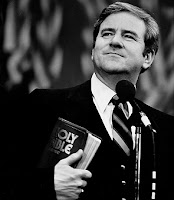 In fact, in the aftermath of Roe v. Wade, the protestants in the anti-abortion movement were vastly outnumbered by catholics, led by long-time republican operative Paul Weyrich. (Weyrich, in 1984, said: “We are different from previous generations of conservatives... We are no longer working to preserve the status quo. We are radicals, working to overturn the present power structure of this country.”)
Falwell was more concerned about something closer to home: the revocation of tax-exempt status of racially segregated christian schools. It took Weyrich, who named the group, to get Falwell, Pat Robertson and the rest to form the Moral majority:
Coincidentally, 1979 was also the year that George Soros started his own social policy endevours, giving the right their favorite foreign bete noir:
 In fact, in the aftermath of Roe v. Wade, the protestants in the anti-abortion movement were vastly outnumbered by catholics, led by long-time republican operative Paul Weyrich. (Weyrich, in 1984, said: “We are different from previous generations of conservatives... We are no longer working to preserve the status quo. We are radicals, working to overturn the present power structure of this country.”)
Falwell was more concerned about something closer to home: the revocation of tax-exempt status of racially segregated christian schools. It took Weyrich, who named the group, to get Falwell, Pat Robertson and the rest to form the Moral majority:
"I was trying to get those people interested in those issues and I utterly failed," Weyrich recalled in an interview in the early 1990s. "What changed their mind was Jimmy Carter's intervention against the Christian schools, trying to deny them tax-exempt status on the basis of so-called de facto segregation."The “Majority” would become a key ally in Reagan’s election and would grow in influence throughout the 80s, although their specific influence would wane toward the end of the Reagan years, and the group would disband in 1989. But the influence of the religious right has continued to this day-- look at the nonsense being spewed by the likes of Rick Santorum and Michele Bachman. As with so much of the right’s agenda since 1979, it’s always back to the future…
In 1979, at Weyrich's behest, Falwell founded a group that he called the Moral Majority. Along with a vanguard of evangelical icons including D. James Kennedy, Pat Robertson and Tim LaHaye, Falwell's organization hoisted the banner of the "pro-family" movement, declaring war on abortion and homosexuality. But were it not for the federal government's attempts to enable little black boys and black girls to go to school with little white boys and white girls, the Christian right's culture war would likely never have come into being. "The Religious New Right did not start because of a concern about abortion," former Falwell ally Ed Dobson told author Randall Balmer in 1990. "I sat in the non-smoke-filled back room with the Moral Majority, and I frankly do not remember abortion ever being mentioned as a reason why we ought to do something."
Coincidentally, 1979 was also the year that George Soros started his own social policy endevours, giving the right their favorite foreign bete noir:
In 1979 Soros began his philanthropic activities by providing funding for black students to attend the University of Cape Town in South Africa. To date he is chairman of the Open Society Institute and has founded many charity organizations that are active in more than 50 countries including Central and Eastern Europe, the former Soviet Union, Africa, Latin America, Asia, and the United States.
6/07/2012
Happy
 A true icon of American pop culture made it's debut in June of 1979: McDonald's Happy Meal. It's hard to imagine going to the Arches without seeing the latest product tie-in being used to pimp fast food to the little ones. Commonly blamed for contributing to childhood obesity rates, the Happy Meal was even banned in San Francisco for their use of toys, although Mickey D's kinda found a way around it.
6/03/2012
Spill
The Gulf of Mexico is still recovering from the BP Deepwater Horizon oil spill. During the spring and summer of 2010, almost 5 million barrels of oil escaped before the leak was capped, although the real amount will probably never be known. It was clearly the worst oil spill in the Gulf, but it was hardly the first. They're all too frequent in the region, often hurricane-related, but the next biggest was the Ixtoc 1 spill that took place on June 3, 1979.
 Spewing 3 million barrels into the Gulf it wouldn't be contained until the following March. It was in much shallower water (170 feet as opposed to the 5000 foot depth in the BP spill), but it still took nine months to cap. The spill started in the same way as BP, with an explosion, and the same efforts were made to stop it by injecting mud and debris into the hole. Chemical dispersants were also used. Prevailing currents directed the slick toward Texas, so officials had some time to prepare. Cleanup was also helped by bad weather. Hurricane Frederic punished New Orleans, but pushed tons of oil away from the beaches in Texas. (Fun fact: 1979 was also the year hurricanes began being named for men.)
While it's beyond discouraging that so little was learned from this spill, there is perhaps hope for the areas affected by the Deepwater spill based on how fully the Gulf seems to have come back from Ixtoc, including the survival of zooplankton and coral that in some cases has grown around and over the oil. Time will tell...

While it's beyond discouraging that so little was learned from this spill, there is perhaps hope for the areas affected by the Deepwater spill based on how fully the Gulf seems to have come back from Ixtoc, including the survival of zooplankton and coral that in some cases has grown around and over the oil. Time will tell...
6/02/2012
The Pope
Many people in this country credit Ronald Reagan for ending the Cold War. (I'm sure his previous six predecessors would have something to say about that.) In reality, the Soviets were already on borrowed time as the 70s ended. Two things happened in 1979 that I think signaled the beginning of the end. In December, the Soviet Army invaded Afghanistan; and on June 2 the Pope visited Poland.

Karol Wojtyla, John Paul II, had been elected to the papacy the previous fall after the death of John Paul I, who'd only been pope himself for 33 days. Wojtyla was the first non-Italian pope since the 16th century, a native of Poland. (He was also the youngest in over a century.) First ordained in the year after the war, he was elevated up to Archbishop of Poland in the early 60s and by the early 70s was in Rome in the College of Cardinals. A fervent anti-communist, he made it a point to visit his homeland in the first year of his papacy.
He was greeted by adoring throngs when he knelt and kissed the ground upon his arrival, a gesture that would become his trademark. His visit had been opposed by the current Polish regime, as well as by Leonid Brezhnev as being too inflammatory. They were right. This visit encouraged the Poles to organize and inspired many in the country to begin pushing back against the communist regime.
The next year strikes erupted first at Lublin and then in Gdansk, which would emerge as the birthplace of Solidarity. In 1983, JPII would meet with Lech Walesa, who won the Nobel Peace Prize that year. By 1989, Walesa would form the first non-communist government in the Soviet Bloc and the USSR itself would collapse in 1991. The Pope's visit in 1979 proved to be a tear in the Iron Curtain that became a mortal wound.
5/28/2012
Hello/Goodbye: May
Born, May 1979
May 2 - Jason Chimera, Canadian ice hockey player
May 2 - Roman Lyashenko, Russian ice hockey player (d. 2003)
May 4 - Wes Butters, British broadcaster
May 4 - Lance Bass, American singer (*NSYNC)
May 5 - Vincent Kartheiser, American actor (Angel, Mad Men)
May 9 - Rosario Dawson, American actress
May 9 - Andrew W.K., American musician
May 9 - Brandon Webb, American baseball player
May 12 - Andre Carter, American football player
May 12 - Steve Smith, American football player
May 13 - Michael Madden, American musician (Maroon 5)
May 14 - Dan Auerbach, American musician – Black Keys, Akron OH
May 16 - Evan Ferrante, actor (Funny or Die)
May 19 - Barbara Nedeljakova, Slovak actress
May 22 - Maggie Q, American actress
May 23 - Brian Campbell, Canadian ice hockey player
May 23 - Rasual Butler, American basketball player
May 24 - Tracy McGrady, NBA forward
May 24 - Frank Mir, American UFC fighter
May 26 - Elisabeth Harnois, American actress
May 26 - Mehmet Okur (Memo), Turkish basketball player
May 28 - Jesse Bradford, American actor
May 28 - Ronald Curry, American football player
May 28 - Monica Keena, American actress
May 29 - Casey Sheehan, American soldier; son of Cindy Sheehan (d. 2004)
Died, May 1979
May 9th - Cyrus S Eaton, Canada/US multi-millionaire, dies at 95
May 9th - Lan Adomian, composer and Lincoln Brigade vet, dies at 73
May 11th - Joan Chandler, actress, dies at 55
May 11th - Lester Raymond Flatt, musician (Flatt and Scruggs), dies at 64
May 16th - Asa Philip Randolph, labor leader & civil rights pioneer, dies at 90
May 24th - Jan Arvan, actor (Red Skelton Show, Zorro), dies
May 25th - John Arthur Spenkelink, American murderer, controversially executed at 30
May 26th - George Brent, actor, dies at 75
May 29th - Mary Pickford, actress, dies at 86
5/27/2012
Push Play 2: the IXI
This might be the craziest thing I found while digging through 1979. We've already seen the introduction of the compact disc, and in a few weeks we'll hear about the release of the Walkman, but the real breakthrough in terms of personal digital music came this week in 1979 with the creation of the iPod. That's right-- the iPod.
 Kane Kramer, a "serial inventor", dreamed up the idea as a 23 year old in the UK. He applied for a patent on his device, which he called the IXI, in 1981, which was awarded in 1985. Sadly for him, he could no longer afford to keep up the payments on the patent and was forced to let it lapse in 1988, after which the design became public domain.
Kramer's story came to light in 2006 when Burst.com sued Apple for copyright infringement and Apple hired Kramer as a "consultant" for the trial, during which images of his creation were released. It wasn't just that he came up with the device, he also envisioned the online store from which users would purchase and download songs. (The original capacity of the IXI was only enough for one song!) He even addressed issues of piracy and copyright infringement.
Kramer is still in there pitching, serving as the Chariman of the British Inventors Society. But even though he wasn't able to reap the rewards, his invention completely changed the way we listen to music.
5/25/2012
MIssing

In the intervening years, efforts to locate missing children have continued to grow from the work of John Walsh, whose son Adam disappeared two years later, to the development of the Amber alerts which can now be received via text. But the case of Etan Patz was the one that first created coordinated community responses to missing children.
5/24/2012
Same As It Ever Was ... Since 1979
It's been 31 years since Jimmy Carter was president and yet for the republicans it's still 1979. Whether it's Romney himself or one of his stooges stand-ins, like Bobby Jindal, these guys are still running against Carter. A lot of this is based on the Cult of Reagan, in that for Reagan to be the bestest president evah, of necessity he had to've saved us from the worst. And the most liberal. We'll hear more about Carter and Reagan later, but it's amazing that after all these years, Carter's still the villain. But mention George Bush (you remember him ... two term president just four years ago?) and ... crickets.
5/15/2012
A brief lull
May 1979 was pretty quiet, for our purposes. A few tidbits from that month…
- Elton John became the first western pop star to play both Israel and the USSR
- At the same time that Village People’s “In The Navy” was at the top of the charts here, Dan White was convicted of manslaughter in the death of SF Mayor George Moscone, and the ruling was marked by the White Night Riots.
- The following week, Pope John Paul ordains the virulently anti-gay Navy admiral John J O'Connor as a bishop
- Canada follows the UK and precedes the US by moving right politically to elect the conservative Joe Clark to succeed Pierre Trudeau as PM
- Israel begins to return Sinai to Egypt
- European Market accepts Greece as member
- The USSR conducts two nuclear test while Carter and Brezhnev sign SALT II
5/04/2012
The Iron Lady
On May 4th, 1979, Margaret Thatcher was appointed
as the first woman PM in British History. She's already been in
Parliament for twenty years, having first been elected in 1959, and had been a
force in the party for ten. In the early 70s, she was secretary for
education and science, becoming famous as "Thatcher, milk snatcher,” after her
abolition of the universal free school milk scheme. This
approach to government would be the hallmark of her time as PM.

She would lead the conservative resurgence in the
west, becoming a close ally to Ronald Reagan. She would also be the first
leader in the west who would regard Mikhail Gorbachev someone they could work with. She would also perfect the "conservative as
victim" attitude so common with her brethren on the right here in the
states, as seen in statements like, "If my critics saw me walking
over the Thames they would say it was because I couldn't swim."
Thatcher presided over 10 years of conservative rule with all the policies that we've seen here with Reagan and those that have followed: lower taxes (especially on the wealthy), attacks on unions, the dismantling of social programs, etc. Her legacy lives on...
4/28/2012
Hello/Goodbye: April
Born,
April 1979
Apr
4 – Heath Ledger (d. 2008)
Apr
7 - Adrián Beltré, Dominican baseball player
Apr
8 - Jeremy Guthrie, American baseball player
Apr
9 - Keshia Knight Pulliam, Newark NJ, actress
Apr 9 - Albert Hammond, Jr., American guitarist (The
Strokes)
Apr 9 - Keith Nobbs, American actor
Apr 10 - Shemekia Copeland, American singer
Apr 10 - Rachel Corrie, American activist (d. 2003)
Apr
12 - Claire Danes, NYC, actress
Apr 12 - Paul Nicholls, English actor
Apr 13 - Baron Davis, American basketball player
Apr
18 - Michael Bradley, American basketball player
Apr 18 - Kourtney Kardashian, American reality television skank star
Apr 19 - Kate Hudson, American actress
Apr
21 - James McAvoy, Scottish actor
Apr 22 - Daniel Johns, Australian musician (Silverchair)
Apr
23 - Barry Fratelli, Scottish bassist (The Fratellis)
Apr 23 - Yana Gupta, Indian actress & model
Apr 23 - Jaime King, American actress
Apr
27 – Jacquelyn Burnham, American Librarian, Akron OH
Died,
April 1979
Apr
4 - Edgar Buchanan, actor (Uncle Joe-Petticoat Junction), 77
Apr
4 - Zulfiqar Ali Bhutto, Pakistani president, 51
Apr
6 - Milton Ager, US composer, 85
Apr
10 - Nino Rota, Italian composer (Torquemada), 67
Apr
23 - Blair Peach, New Zealand-born anti-fascist (b. 1946)
Apr
29 - Julia A Perry, US composer/conductor, 55, Akron OH
Apr
29 - Hardie Gramatky, American author and animator, “Little Toot”, 72
Saturday Flashback: Pop Muzik
The single Pop Muzik broke in the UK in the Spring of 1979, but didn't come out here until that fall. Released by "M", it had a synthesized pop sound that reminded many people of Devo, which sparked rumors that M was Mark Mothersbaugh. In fact, the guy behind M was a Brit named Robin Scott. Along with people like Gary Numan, Scott helped to popularize the synth pop sound that would come to define one of the biggest sounds of the 80s. Enjoy!
4/26/2012
Default
 Much was made in 2011 of the possibility of a US default. The republicans were rightly castigated for playing games with the financial credibility of the United States to pursue their slash-and-burn policies. It seemed unthinkable that they would risk sending us over the debt cliff for the first time since the beginning of the republic. As it turns out, that last part wasn’t exactly true.
On April 26th 1979, the US Government went briefly into default. The reasons are depressingly familiar:
Investors in T-bills maturing April 26, 1979 were told that the U.S. Treasury could not make its payments on maturing securities to individual investors. The Treasury was also late in redeeming T-bills which become due on May 3 and May 10, 1979. The Treasury blamed this delay on an unprecedented volume of participation by small investors, on failure of Congress to act in a timely fashion on the debt ceiling legislation in April, and on an unanticipated failure of word processing equipment used to prepare check schedules.The United States thus defaulted because Treasury’s back office was on the fritz.
The situation was small and temporary, but it was real and had the consequence of sharply raising the interest rate on T-bills for several months, essentially increasing the cost of government borrowing .
Presumably the Treasury IT infrastructure is today more robust than it was back then, and with interest rates that have been around zero for years, the immediate costs would not spike the way it did then, but this event proved even a small, short-lived default could be disastrous. Given the willingness of the teabaggers in Congress to play chicken with the full faith and credit of our (and their) government, we may still find out just how bad it could be…
4/20/2012
Killer Rabbit


But it was more than a silly and embarrassing tale. It became a metaphor for Carter's presidency: a feckless man flailing away at his problems, in this case a bunny rabbit. It's still comedy gold to the right. He'd just presided over the signing of the Egypt-Israel Peace Treaty, was thought to have handled Three Mile Island well, but this trifling event still diminished him further in the eyes of many Americans. The rest of the year would do little to change that.
Of course, a lot of us thought of this when the story came out...
h/t Cecil Adams
4/14/2012
Saturday Flashback: Kate Bush
Kate Bush has always been an acquired taste. She was never that well known here in the states save for her Hounds of Love LP that featured "Running Up That Hill"which came out six years later. I hold her personally responsible for Tori Amos and Sarah McLachlan, even Lady Gaga (a little) and Florence of the Machine. Kate didn't release anything in 1979, but in April of that year she hit the road for her first-- and last-- tour. For a variety of reasons, she's never toured again. This tour was also notable in that it featured the first ever use of the now ubiquitous wireless headset mic. Here she is later in the year with a couple from her Xmas special. Enjoy!
Subscribe to:
Posts (Atom)